What Is OpenClaw and Why It Matters in 2026?

Artificial Intelligence has spent the last three years answering questions. In 2026, the conversation has shifted dramatically. The biggest trend is no longer AI chatbots. It is AI agents. Among dozens of agent frameworks that appeared over the last year, one project has emerged as a defining force in the open-source ecosystem: OpenClaw. OpenClaw is not just another AI tool. It represents a fundamental shift from AI that talks to AI that acts. What Exactly Is OpenClaw? OpenClaw is an open-source AI agent platform that allows Large Language Models (LLMs) such as GPT, Claude, Gemini, DeepSeek, and local models to… Read more


Cursor Origin: The Git Platform Built for AI Agents

At Cursor’s Compile conference in mid-June 2026, the company announced something that caught a lot of attention. They called it Origin — a Git-compatible code hosting platform built specifically for the agentic era of software development. Their own words: “Origin gives teams and agents a place to host, review, and collaborate on code. Available this fall.” This isn’t just another GitHub alternative. It’s a clear signal about where the entire software development workflow is heading — and it’s worth paying attention to. The Problem Nobody Talks About We spend a lot of time talking about how AI agents write code… Read more


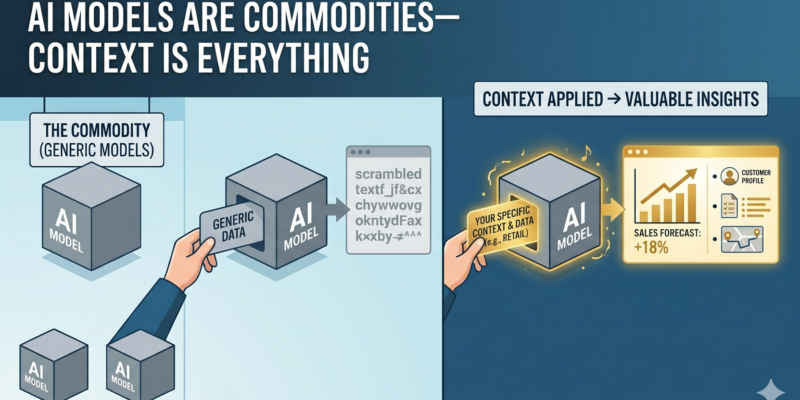
AI Models Are Commodities—Context is Everything

Over the last few years, access to powerful AI models has become increasingly democratized. Vendors are multiplying, release cycles are accelerating, and capabilities are converging. This leads to a critical question: If everyone has access to the same tools, where does the competitive advantage come from? I don’t believe the answer is the model itself. I believe the answer is context. The Commoditization of AI Not long ago, having access to advanced AI capabilities was a significant advantage. Today, the landscape looks very different. Organizations can access powerful models through APIs, cloud platforms, local deployments, and open-source alternatives. The gap… Read more


Most AI Products Don’t Fail at the Idea Stage

Lately, I’ve been hearing this a lot in corporate conversations: “We built an AI POC.”“We automated this with AI.”“Our AI demo was successful.” And honestly, many of them are successful at the POC stage. The models work.The demos look impressive.The presentations create excitement. But very few actually make it all the way to production and become part of real business operations. I think that’s one of the biggest gaps in the AI space right now. Not building the demo.Not proving the concept.But actually shipping something reliable, scalable, and usable in the real world. The demo environment is controlled.Production is not…. Read more


How Large Language Models (LLMs) Work:

A Data Engineer’s Guide to Understanding Large Language Models If you’ve ever typed a prompt into ChatGPT, Claude, or Gemini and wondered, “How does this thing actually work?” — you’re not alone. Large Language Models (LLMs) are the most talked-about technology in recent years. Yet what happens under the hood remains unclear to many engineers. In this article, we’ll break down how LLMs work — from architecture to training to inference — so you understand not just what they do, but how and why they do it. 1. What Is an LLM, Really? At its core, a Large Language Model… Read more


AI Guardrails — The Thing Nobody Thinks About Until It’s Too Late

In the last post, we talked about what AI agents are — systems that can reason, plan, use tools, and take real actions in the real world. Powerful stuff. Now here’s the uncomfortable follow-up question: what happens when an agent does the wrong thing? It sends an email to the wrong person. It runs a query that locks your production database. It leaks a piece of data that should never have left the system. These aren’t hypotheticals. In 2025, a growing number of companies reported AI agents accessing systems they weren’t supposed to or allowing inappropriate data access. And this… Read more


What Are AI Agents? And Why Everyone Is Suddenly Talking About Them

You’ve probably noticed the word “agent” showing up everywhere in the AI world. Every product launch, every conference talk, every LinkedIn post — agents, agents, agents. But most explanations either drown you in jargon or make it sound like science fiction. Let’s fix that. By the end of this post, you’ll understand what AI agents actually are, how they’re different from the chatbots you already use, and why this shift matters. A Chatbot Answers. An Agent Acts. Start here. This is the single most important distinction. A chatbot takes your input and gives you a response. You ask a question,… Read more